
Things Remembered & Things Forgotten

Gaps in memory, and dissociative amnesia, the lingering effects of CPTSD. Even after years of healing, the struggle with memory and cognitive function can linger and cause significant impact on daily life. It’s possible to work on processing and reactions so that triggers have less of an impact. Time passing creates a physical distance between the present moment and traumatic moments, easing the effect of emotional response. Even with all the progress of healing, a faltering memory causes distress.

It’s been said that healing is not linear. Sometimes the upswing of progress gets interrupted by a spiral that feels like falling backwards. A rough moment can disappear into full confidence that feels like being “back on track” and so the cycle becomes more like a tornado- twisting and turning, with sudden changes in direction, some beauty and awe, some devastating destruction. The truth is, healing becomes a new state of being, with its own complex state of mind, and the need to adapt to life in unique ways.

There have been moments in my own life where I have longed for a resolution. I have hoped that healing would have an ending that might transport me to a new state of being that looks much more like an old state of being before the trauma. Yet, a lived experience cannot be erased. Who I am today is assembled from all of my experiences; my failures, my successes, the residual emotions that remind me what those moments felt like, and the calculations that come out of knowing all that I now know because of those experiences. The good, the bad, and the ugly are better off owned rather than avoided so that I can completely understand who I am and where I am going.

Understanding the potential to use my experiences to become a better version of myself today means I have the power to dictate what any event or emotion means for me in the here and now. My power and control lie in what I do with what has happened to me rather than passively avoiding the truth of my past. I am at the point in my own healing that I am empowered, confident, and actively seeking growth. So, I can say from experience, there is hope. To anyone who is reeling in a fresh wound, facing the reality of pain and grief, know that you won’t live there forever.

Blooming with Deep Roots

Envision a beautiful flower; a deep, radiant shade of purple, with sturdy, full petals, a thick, hearty stem, and roots reaching deep into the soil, able to withstand any storm. See it as a plump bud being kissed by the springtime sun. As the rainy season ends, the sun comes close and wraps it’s light all around, nudging it to awaken. The petals take a deep breathe, opening wide, falling against one another, in a magnificent display of beauty, resilience, and purpose. A flower may blossom many times as it grows, starting to unfurl and showing glimpses of what it someday will be. Then, when fully developed and in its prime, that flower will bloom and fulfil it’s purpose of supporting life, creating new life, and bringing pleasure to the world around it.

The analogy of blooming with deep roots is one that resonates with me and my spiritual journey. In this season, I am blooming, fully rooted, resilient, and ready to fulfil my purpose. It was around 12 years ago that I began working as a spiritual coach and mentor. This preceded my start as a counselor and therapist, and ultimately, it’s what I came back to. Over the past 20 years, I have had mentors of my own from a variety of backgrounds and viewpoints. I have learned to value diversity of opinion and admire the way that many sources confirm the same truths. As a child, I was raised in a variety of religious settings rooted in Christianity. Even at a young age, I had evident spiritual gifts; knowledge, discernment of spirits, dreams/prophecy, and healing. As I have gone through my life journey, I have come to understand my gifts and embrace my potential. In fact, I love helping others to find their passions and live out their purpose as well.

I’ve learned that there are many names for the same things, depending on the culture that is defining it. You might accept that I’ve had prophetic dreams and spiritual knowledge, or you might understand it as clairvoyance, extrasensory perception, or say that I am an Empath. Any of those descriptions are accurate to what I experience. Regardless of the semantics, I have been using my spiritual gifts to help others for many years. I’ve helped people navigate their shadows and overcome trauma. I’ve facilitated physical and emotional healing. I’ve given guidance through deep processing, providing insight, and building up confidence through encouragement because of what I perceive. I’ve found a variety of tools to be helpful and as a lifelong student, I believe in sharing from an abundance of resources that provide support beyond my connection with someone.

I meet with people in dark places, in uncertainty, and with needs that require a kind of intimate knowing to grow through. We thrive in connection. We heal through connection. Even as I myself am healing parts of me, I have so much to offer others who are going through the places I’ve been. After all, I must heal myself if I am ever to help heal another. That is a life experience I have plenty of. Be Blessed.

Photo by Billel Moula

Post Trauma

You’ve likely heard of PTSD: Post Traumatic Stress Disorder. After someone has gone through a traumatic event, they may develop symptoms that interfere with daily life and include physical, mental, and emotional disturbances. At the extreme, this can be crippling and requires professional support to recover. In many cases, symptoms are less severe and may even be hidden, giving the appearance of normal functioning. Many professionals believe that PTSD can be resolved by treatment and plenty of living proof is walking around in the world. Some believe that the effects are life-long and at the very least, change how a person experiences life. To any person who is struggling with PTSD, especially those who try to hide it, do not be afraid to reach out and seek support. There are amazing therapies that can improve your life.

What happens after therapy? Maybe you’ve improved enough to function well but still feel different than you used to be. Maybe you have been through something traumatic but don’t have the symptoms of PTSD, yet you still feel not yourself. Maybe you notice that traumatic thoughts resurface sometimes, or that triggers exist in unexpected ways. Regardless of any diagnosis, or treatment you’ve had, maybe you just know that an event changed you and that’s hard to accept.

When there’s no stress disorder (PTSD) but you’re stuck in the limbo post trauma (PTSD) or you’ve healed a lot but still the post trauma changes linger, it can be a confusing place. Social messages tell you that you’re either all broken or should be all healed and back to your old self. That’s simply not the case. Everything we go through in life forms us, changes us, and impacts who we become. This is true of positive and negative occurrences, big and small. Even when we go through a negative or distressing event, we can utilize the effects of that experience for positive growth. We become more aware, more insightful, more compassionate, we see the world differently, and even the hard parts can be used for good.

Trauma is too common. It’s part of the human experience. Everyone gets dealt a different hand and we never know what tomorrow holds. Count your blessings every day because bad can’t erase good. And if you find yourself in the post trauma fog looking for answers, come with me on a journey of healing and find hope.

Triggered

Photo by Pixabay on Pexels.com

This week I wrote a guest post on another blog. It was a simple encouragement about the possibility of overcoming social anxiety. This is an arena where I have a lot of experience and I have first-hand success in helping people overcome anxiety. There is a defining mindset that absolutely matters when trying to overcome any mental obstacle. What you believe matters.

This could not be more evident than when interacting on social media. People display what they believe in how they respond to any challenging thought. Some people become invested supporters because they see the vision. Others become boisterous opposition because they cannot accept anything that challenges what they believe. Those are the people who are clinging to excuses and are not yet capable of true change. Wouldn’t you know, they came for me when I suggested that anxiety can be overcome! How dare I offer to take away their crutches and show them how to walk!

Okay, I’m being slightly flippant while enjoying the show. I love how people say everything you need to know without speaking. This illuminated a concept for me that is too good not to share. Trigger safety matters.

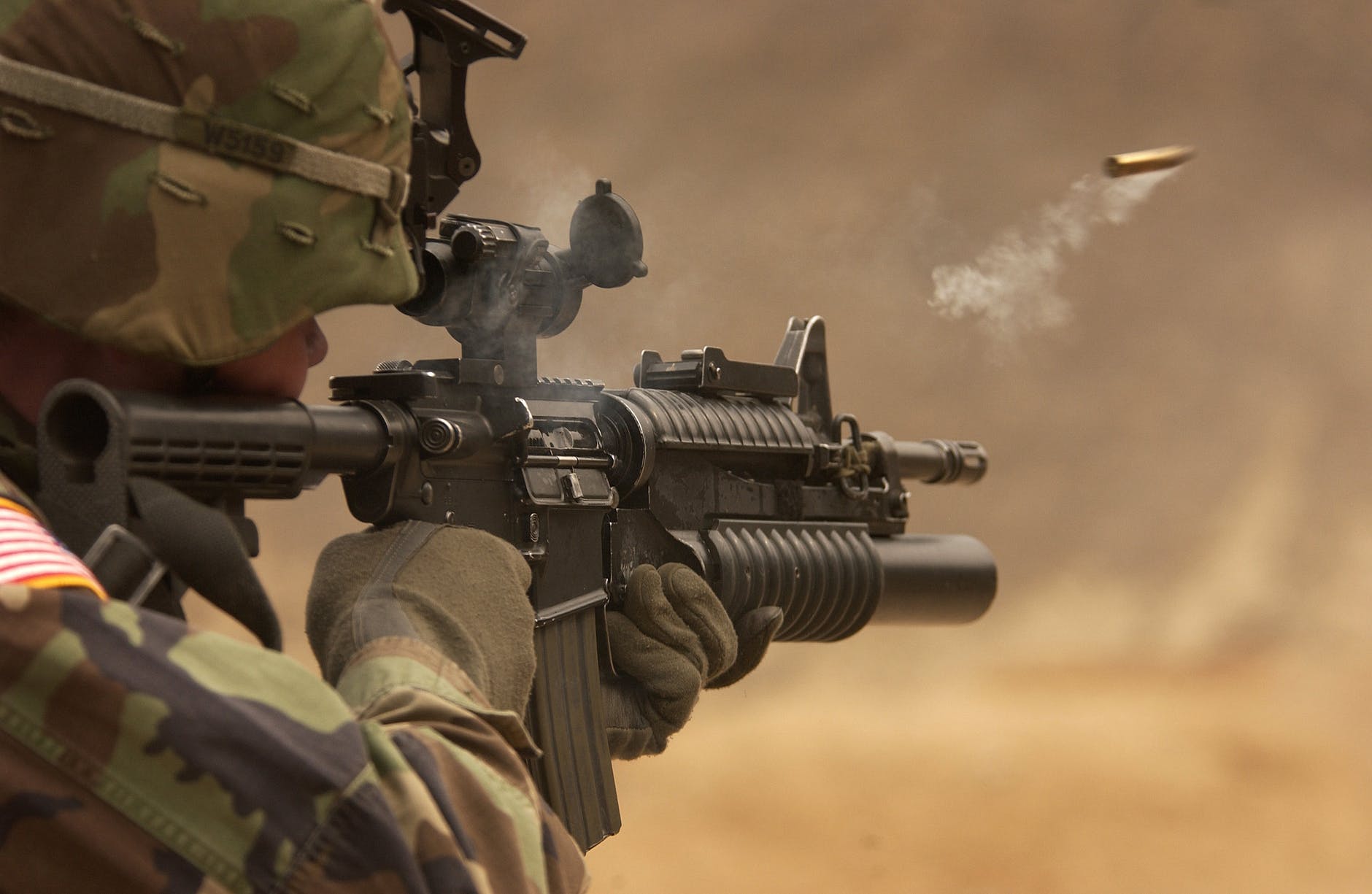
Where you point the barrel matters. How you place your finger matters. Knowing your equipment matters. If we are talking about real guns, every part of gun safety matters. Who would argue that? Trauma and emotional regulation are a lot like holding a loaded gun. The second the trigger is pulled, your control ends. The bullet will hit what it was aimed at. You have to be prepared for the possible outcomes prior to the trigger pull.

Trauma loads a bullet. It becomes your responsibility to learn your equipment, maintain it in good working order, and always be aware of where the barrel is pointed. Your mind and body are the equipment. If left unattended, unkept, you become vulnerable to someone pulling your trigger. They say guns don’t kill people and there is always a person pulling the trigger. What does that say about trauma and our responsibility to heal?

I know it’s deep, inspiring, or maybe challenging to think about trauma in this way. Just like social anxiety, I believe you can overcome it. Healing is possible.

Trauma is a Buzzword

Everywhere from social media to mainstream media, people are talking about trauma. Like no other time in history, we have access to an abundance of trauma-informed care options that range from self-help to professional help. Even the term, trauma-informed, is a cultural norm in 2022. So where did all this trauma come from? Are there really so many people with trauma?

Traditionally, trauma was viewed as a major, life-altering, negative event. War, natural disaster, death, loss, divorce, abuse, etc. were all the well-known causes of trauma. Today, it seems like anything can be considered traumatic depending on what definition you apply to it. There is some truth to this. How we experience an event can mean much more than the event itself. That’s why a group of people can go through the same disaster and come out with very different effects. Yet, if state-of-mind determines if something is traumatic, then being stuck in trauma response would logically create more trauma with new situations. Seems like quite the cycle.

When I embarked on my journey as a counselor over a decade ago, my vantage point was a trauma-informed therapist. My own life story contains the pain which lead to me wanting to help others. Not only did I have first-hand experience, but I trained and studied in the various theories and modalities that would help me to help others the way I had been helped. At some point along the way, as trauma became a mainstream concept, I started to pull back from seeking out the trauma in others. Honestly, it is overwhelming to be aware of and intimately involved in the pain and healing process of others.

Recently, I have come to accept that the things which were healed in me, still exist in me. Even though triggers lost their power and coping was replaced by understanding, I am shaped by my experiences. Both the undoing and the rebuilding are mine. Life takes me through cycles where I find a sensitivity, I deconstruct the ideology which is causing me pain, I heal and define my own understanding, and I use it to help the next soul who is brought my way. Today, like so many years ago, my passion to heal the world starts with healing a newly uncovered part of me.